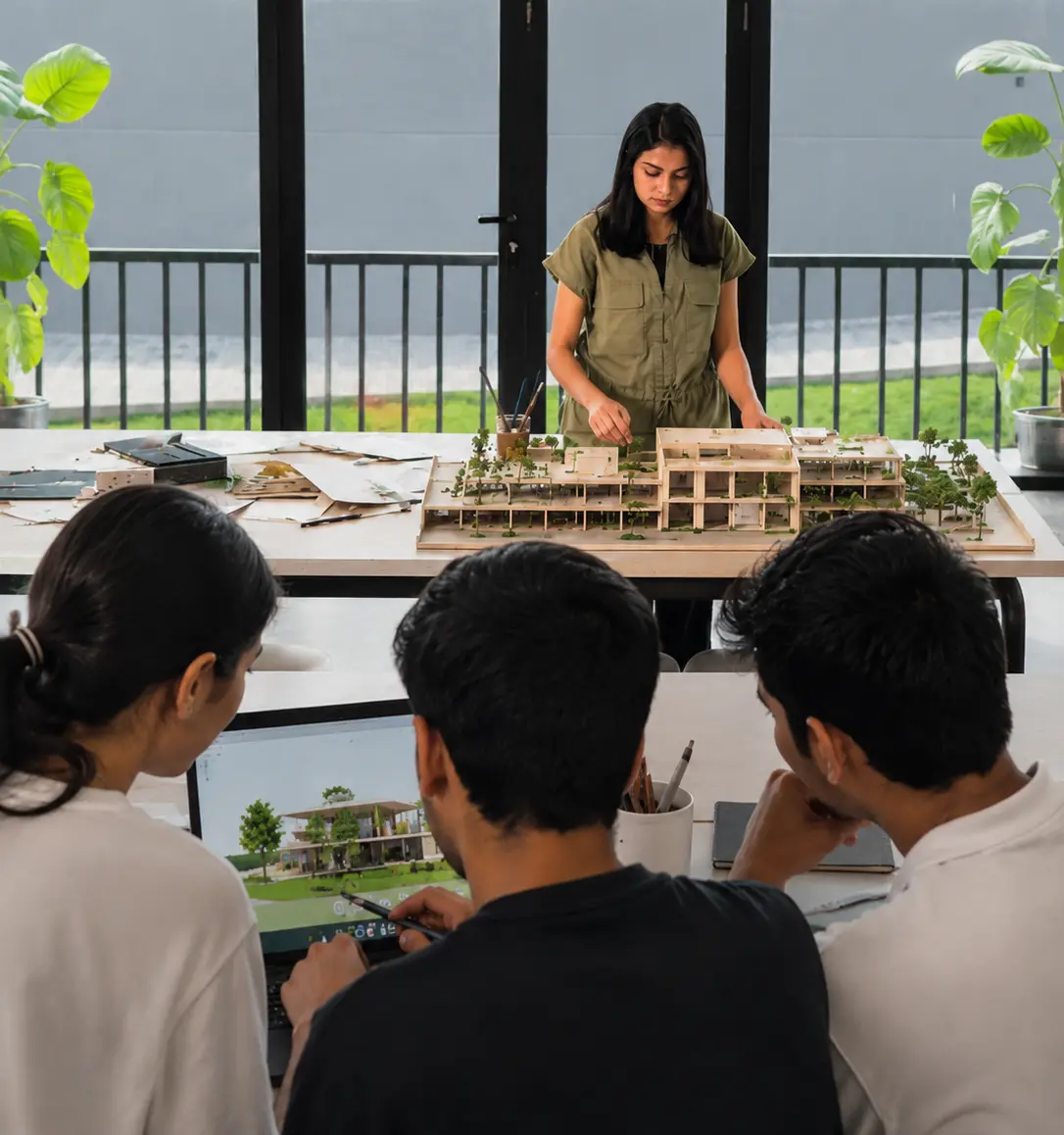
What Environmental Design Actually Is
Environmental design goes beyond traditional architecture. Rather than treating buildings and landscapes as separate disciplines, it integrates spatial creativity, ecology, sustainable systems, and critical inquiry into one holistic practice. Students trained in this field learn to look at the built and natural environment together — factoring in ecological planning, material life-cycles, climate adaptation, and smart technologies — rather than designing a structure in isolation from the land and climate around it.
In practice, that means environmental design work spans:
- Architectural and landscape integration — treating buildings and their surrounding ecosystems as one connected design problem
- Climate-responsive design — planning spaces that adapt to local climate realities rather than fighting them
- Sustainable material and resource strategy — reducing environmental impact through material choices and system design
- Urban and community-scale design research — using site analysis and ethnographic research to solve real socio-environmental problems, not just aesthetic ones
Why This Field Is Growing Across South Asia
A few forces are driving real demand for environmental designers right now:
- Rapid urbanization across Pakistan and the wider region is putting pressure on cities to grow smarter, not just bigger.
- Climate realities — extreme heat, flooding, water stress — are forcing developers and public infrastructure projects to prioritize climate resilience, not treat it as optional.
- Growing demand for sustainable real estate means developers increasingly need designers who understand ecological systems, not just floor plans.
This combination has created real demand for designers who can operate at the intersection of architecture, ecology, and technology — which is a narrower, more specialized skill set than a general architecture degree provides on its own.
Skills You Actually Build in This Program
A strong environmental design curriculum should build competence across several areas at once:
- Interdisciplinary ecological design — combining architectural principles with landscape systems and ecological science
- Climate resilience and sustainability strategy — sustainable space-planning and resource conservation methods
- Technical and spatial simulation tools — parametric modeling, environmental mapping, and digital prototyping software
- Research-driven problem solving — critical design research and site mapping applied to real community contexts
- Project leadership — the ability to direct multi-disciplinary teams, since environmental design projects rarely involve just one type of specialist
Where the Degree Can Take You
Because the field sits between several disciplines, graduates aren’t limited to one narrow job title. Career paths include:
- Environmental / sustainable design consultant for architecture and planning firms
- Landscape and urban design roles, particularly on climate-adaptive or community infrastructure projects
- Green building and sustainability specialist roles within real estate development
- Research and policy-adjacent roles, for graduates drawn to the socio-environmental research side of the field
- Independent practice, for designers who want to consult directly with developers or public-sector projects
AUREA's B.Des in Environmental Design
At AUREA — School of Art, Design and Architecture in Lahore, the Bachelor of Design (B.Des) in Environmental Design is a 4-year, onsite program with Fall and Spring intakes. The curriculum is built around human-centered problem solving, expanding beyond traditional architecture and landscape boundaries to train students in ecological planning, climate adaptation, and smart technologies from the ground up. Students work across a genuinely multidisciplinary studio environment — one day analyzing site microclimates or detailing green building systems, the next working in the digital lab with parametric modeling and ecological simulation tools.
The program is explicitly built around where the region is heading: rising urbanization, climate pressure, and growing demand for sustainable real estate development across South Asia — positioning graduates for design careers both within Pakistan and internationally.
Curious whether Environmental Design is the right direction for you? Explore the full B.Des Environmental Design program, download the prospectus, or schedule a campus tour to see the studios and digital labs in person.