
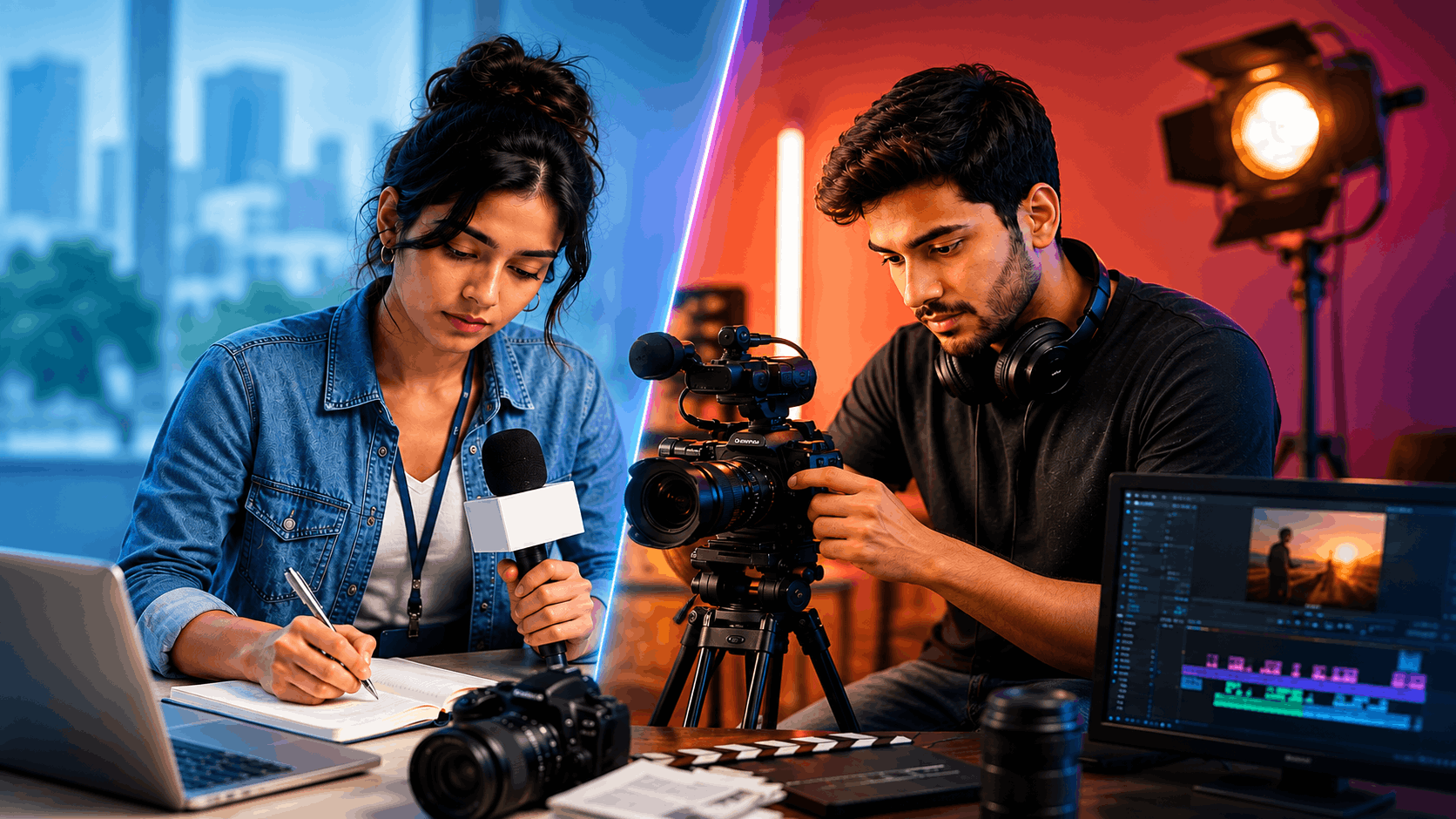
BS Journalism & Digital Storytelling vs. BS Media Design, Film & TV: Which Degree Is Right for You?
The media industry has changed dramatically. Today, journalism is no longer limited to newspapers and television news, while filmmaking is no longer restricted to cinemas and traditional television channels. Social media, streaming platforms, digital publications, podcasts, video content and interactive media have created new career opportunities for students interested in communication and storytelling.
At AUREA Education, students interested in media can explore two particularly relevant undergraduate pathways: BS Journalism & Digital Storytelling and BS Media Design, Film & TV.
Although both programs are connected to media, communication and storytelling, they prepare students for different professional directions. Understanding the difference can help students choose a degree that matches their interests and long-term career goals.
BS Journalism & Digital Storytelling
The BS Journalism & Digital Storytelling program combines traditional journalism principles with modern digital communication. According to AUREA, the program blends ethical reporting with multimedia creativity and prepares students to develop narratives through data visualization, interactive platforms and digital networks.
This makes the degree particularly suitable for students who enjoy researching information, writing stories, interviewing people and communicating news through modern digital platforms.
What Kind of Student Should Choose Journalism?
This program may be a strong choice if you:
-
Enjoy writing and research
-
Like discovering and explaining information
-
Are interested in current affairs and social issues
-
Enjoy interviewing and communicating with people
-
Want to create digital news content
-
Are interested in social media journalism
-
Want to combine writing with multimedia
-
Enjoy storytelling based on real events and information
The modern journalist is no longer simply a newspaper reporter. Digital journalists can work with written articles, photographs, video, data, interactive content and social media.
Career Opportunities After Journalism & Digital Storytelling
Graduates can potentially explore careers such as:
-
Digital Journalist
-
News Reporter
-
Content Writer
-
Investigative Journalist
-
Multimedia Journalist
-
Digital Content Producer
-
Social Media Journalist
-
Editorial Assistant
-
Researcher
-
Copywriter
-
Communications Specialist
-
Digital Storyteller
The degree can also provide a foundation for students who want to build careers in digital publications, news organizations, media companies, communication departments and independent digital media.
BS Media Design, Film & TV
The BS Media Design, Film & TV program takes a different approach to storytelling. AUREA describes it as combining traditional cinematic storytelling with digital innovation, with an emphasis on directing, producing and creating immersive media experiences across film, television and streaming platforms.
Instead of primarily focusing on reporting and journalism, this pathway is more closely connected to visual production and entertainment media.
Students who enjoy cameras, filmmaking, directing, production, visual storytelling and video content may find this program more suitable.
What Kind of Student Should Choose Film & TV?
This program may be a better fit if you:
-
Enjoy filmmaking
-
Like working with cameras
-
Want to learn about production
-
Are interested in directing
-
Enjoy visual storytelling
-
Want to create films or television content
-
Are interested in streaming platforms
-
Enjoy video production and digital media
-
Want to work behind or in front of the camera
The growth of streaming platforms and online video has created new opportunities beyond traditional television. Filmmakers and media professionals can now produce content for television, cinemas, streaming services, YouTube and other digital platforms.
Journalism vs. Film & TV: What’s the Difference?
The biggest difference between the two programs is the purpose of storytelling.
Journalism is primarily concerned with discovering, researching and communicating information.
Film and television are primarily concerned with creating visual stories and media experiences.
| Feature | BS Journalism & Digital Storytelling | BS Media Design, Film & TV |
|---|---|---|
| Main focus | Journalism & digital communication | Film, television & media production |
| Storytelling | Research-based | Visual & cinematic |
| Writing | Strong emphasis | Important but production-focused |
| Reporting | Major component | Limited compared with journalism |
| Filmmaking | Supporting skill | Major area |
| Directing | Limited | Important |
| Production | Digital/multimedia | Film & television production |
| Data visualization | Relevant | Less central |
| News media | Strong connection | Less focused |
| Streaming | Digital storytelling | Film & entertainment content |
| Best suited for | Writers, reporters & communicators | Filmmakers, directors & producers |
Journalism vs. Film & TV: Which Has More Creative Freedom?
Both programs are creative, but they express creativity differently.
A journalism student may creatively determine how a real story is researched, structured and presented.
A film student can creatively develop how a story looks, sounds and feels through cinematography, editing, direction, production design and other filmmaking techniques.
If you enjoy asking:
“What really happened, and how can I tell people about it?”
Journalism may be more suitable.
If you enjoy asking:
“How can I turn this idea into a powerful visual experience?”
Film and TV may be the better choice.
Which Program Is Better for Social Media?
Interestingly, both degrees can lead toward social media careers, but through different skill sets.
A journalism graduate may create:
-
News videos
-
Interviews
-
Explainer content
-
Investigative stories
-
Articles
-
Infographics
-
Social media reports
-
Data-driven stories
A Film & TV graduate may create:
-
Short films
-
Reels
-
Commercials
-
Music videos
-
Documentaries
-
Web series
-
YouTube videos
-
Promotional videos
-
Streaming content
Therefore, students who want to become digital creators should consider what kind of content they want to create rather than simply choosing the program with “digital” or “media” in its name.
Which Program Is Better for You?
Choose BS Journalism & Digital Storytelling if:
You are naturally curious, enjoy research and writing, and want to communicate real stories to an audience.
This pathway is particularly interesting for students who see themselves as journalists, digital reporters, researchers, content creators or communication professionals.
Choose BS Media Design, Film & TV if:
You are passionate about filmmaking, cameras, directing, production and visual storytelling.
This pathway is particularly interesting for students who want to work in film, television, streaming, digital video or media production.
Can You Work in Both Industries?
Yes.
The boundaries between journalism and filmmaking are becoming increasingly flexible.
A journalist may learn video production and create documentaries.
A filmmaker may produce documentaries based on real-world research.
A digital content creator may combine journalism, photography, video production, writing and social media.
This means the skills developed through one program can sometimes complement the other.
However, your primary academic direction still matters. If reporting and research excite you more, journalism provides the more direct route. If production and cinematic storytelling excite you more, Film & TV provides the more direct route.
AUREA’s Media & Journalism Pathways
AUREA currently lists both BS Journalism & Digital Storytelling and BS Media Design, Film and TV under its Media & Journalism offerings. The institution describes the journalism degree around ethical reporting and multimedia storytelling, while the Film & TV degree emphasizes directing, producing and immersive media experiences.
This gives students an opportunity to choose between two different approaches to the rapidly changing media industry.
Rather than asking which degree is universally better, students should ask:
Do I want to report stories, or do I want to produce them?
That single question can make the choice much easier.
Final Verdict
BS Journalism & Digital Storytelling is the stronger choice for students who are interested in journalism, reporting, research, writing, digital news and multimedia communication.
BS Media Design, Film & TV is the stronger choice for students who are interested in filmmaking, directing, production, television, visual storytelling and streaming media.
Neither degree is automatically better than the other. The right choice depends on the type of storyteller you want to become.
If your strength is words, research and information, consider Journalism & Digital Storytelling.
If your strength is visuals, cameras and cinematic storytelling, consider Media Design, Film & TV.
In an increasingly digital world, both paths can provide opportunities to build a career around one of the most valuable skills in modern media: the ability to tell a compelling story.
Where It Can Take You
Graduates of the program are prepared to step into a wide range of creative industries, including:
- Film and television: animation, post-production, and visual effects
- Gaming: character and environment art, cinematics, and interactive visual design
- Digital media: content creation for streaming platforms, advertising, and emerging digital formats
As these industries continue to grow and lean further into digital-first content, the demand for designers who can move fluidly between creative vision and technical execution keeps rising.
Why This Matters Now
Animation and VFX are no longer niche skills reserved for big-budget films. They’re everywhere, in the ads we scroll past, the games we play, the shows we binge, and the immersive experiences brands are increasingly investing in. Studying this field today means positioning yourself at the center of one of the most in-demand creative disciplines in the digital economy.
Craft the Worlds Others Only Imagine
If you’ve ever wanted to build the kind of visual experiences that make people stop, watch, and feel something, this is where that journey starts.
Explore the Bachelor of Design in Animation and VFX at Aurea and take the first step toward a career at the intersection of art and technology.